

The year 2020, thankfully now behind us, generated major headlines in cybersecurity. Let us recall the attacks on healthcare facilities and logistics companies, which faced attacks at the most critical times—during the COVID-19 crisis and the Christmas shopping season, respectively. However, these reports describing the situation mainly in large organizations and global companies were only the tip of the iceberg. Overall, the greatest burden last year was borne by millions of small and medium-sized businesses (SMBs), whose stories do not make the front pages.
Cybercriminals saw the coronavirus crisis as an opportunity for higher profits and focused on weak points that emerged in connection with social distancing requirements—employees working from home and more intensive remote collaboration. While large companies were able to address this situation quickly, SMBs, with their limited budgets and human resources, faced a Sophie's choice of what to resolve immediately and what to leave to its fate.
Let us recall two areas that are critically important for SMB business continuity: corporate network security and email. According to some estimates, more than 50% of last year's attacks targeted SMB networks. Many of these companies lost their data or fell victim to extortion in connection with ransomware attacks. In addition to limited budgets, one of the main causes is the fact that the infrastructure for protecting corporate networks is too complex and fragmented into many isolated products, leaving IT administrators simply unable to keep up.
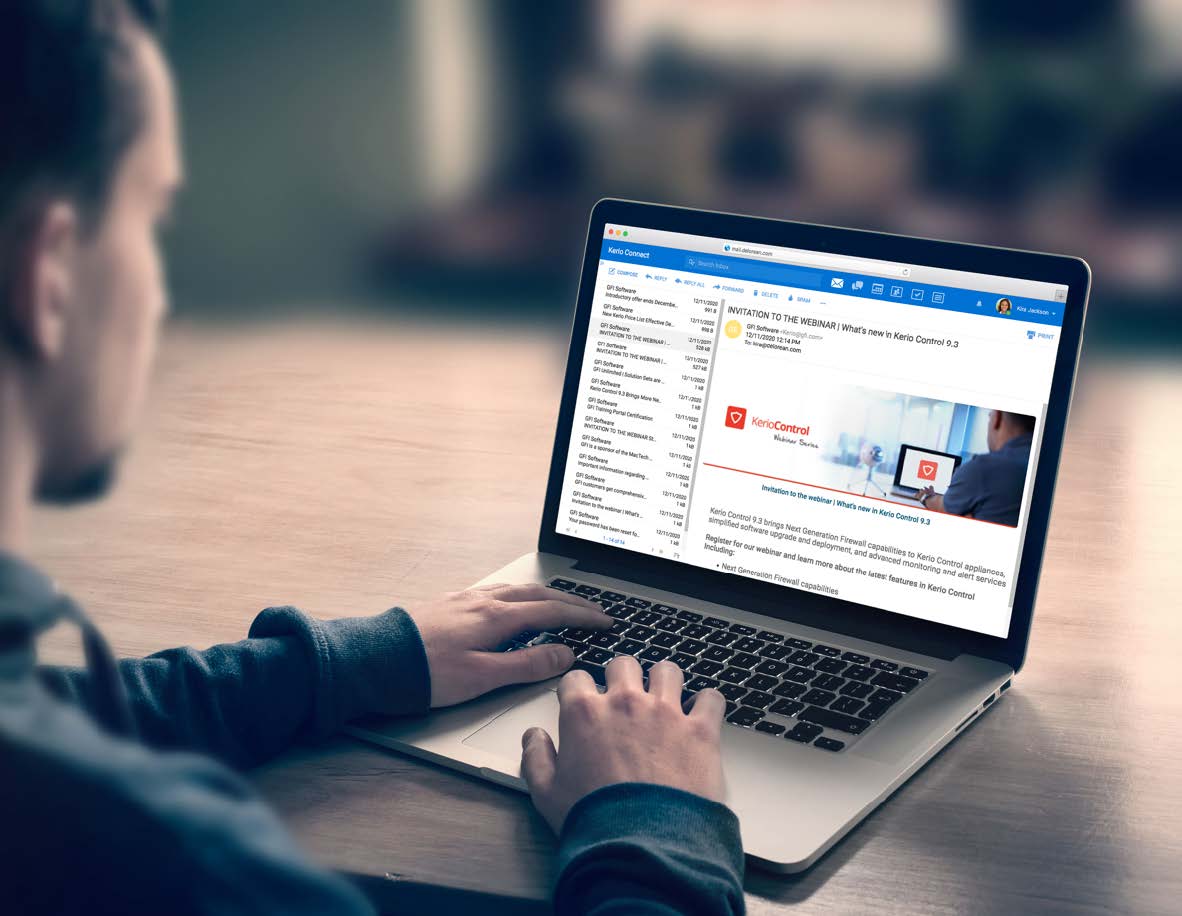
Email is, especially today, a key communication tool and for many SMBs the only one for which they have no alternative. And, as if by design, 94% of malware is distributed to companies via emails, with social engineering methods recently contributing through, for example, fake offers of COVID vaccines. At the same time, rules for email encryption and archiving are becoming stricter, and many users working from home expect the same convenience when working with emails as they have in the office.
Nor will 2021 be easy, and for some SMBs it may be literally brutal if they do not pay sufficient attention to protecting their networks and emails, which are now a necessary condition for their long-term survival. This does not necessarily mean increasing IT budgets, but rather optimizing the security infrastructure so that it is less complex, more consolidated, and enables faster responses to a wide range of incidents.
Learn more about GFI Software's secure email solution at https://gfi.zebra.cz/secure-mail/.
The article was also published as a commentary in Computerworld magazine, issue 2/2021
Article author: ZEBR.ai editorial team



