

The latest Cloudflare report shows that DDoS attacks remain a significant threat
PRAGUE, March 9, 2021 – Cloudflare, a provider of a platform that improves the security, performance, and reliability of internet applications, stated that according to its Q4 2020 DDoS report, this period saw the first year-on-year decrease in the quarterly number of attacks. Nevertheless, the report notes that DDoS attacks continue to pose a significant threat due to the sharp increase in IoT devices and, in particular, with regard to new hacker tactics, including extortion through the threat of a DDoS attack.
The findings are based on information obtained from more than 200 Cloudflare data centers, which protect over 3 million customers and provide interesting statistics on DDoS attacks and their trends. The most notable Q4 findings include:
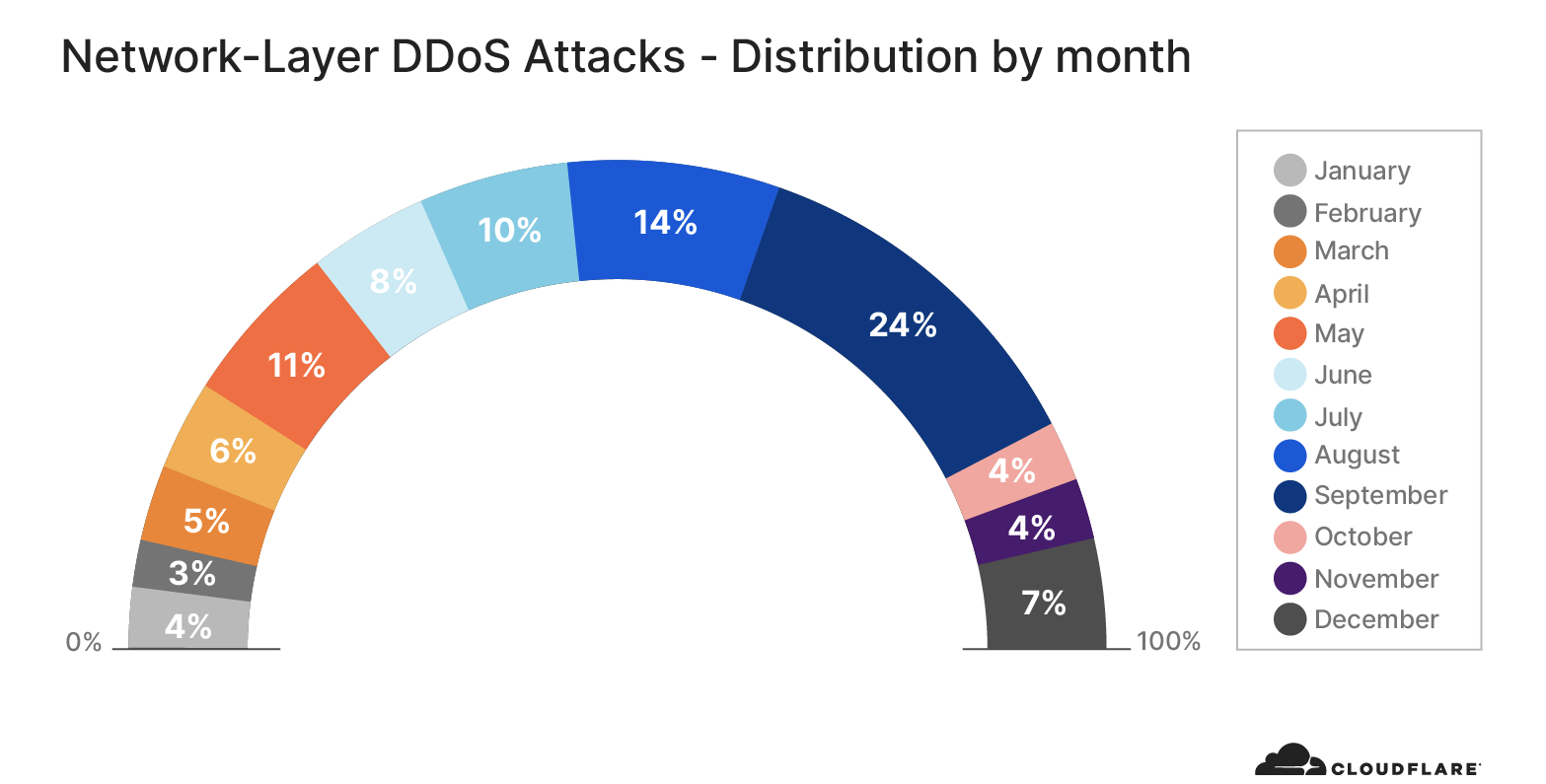
- Number of attacks: For the first time in 2020, the total number of attacks recorded in the fourth quarter decreased compared to the previous quarter.
- Attack duration: 73% of observed attacks lasted less than an hour, down
from 88% in the third quarter. - Attack vectors: SYN, ACK, and RST floods remain dominant, while the increase in NetBIOS attacks by an incredible 5,400% is noteworthy.
- New attacker tactic: Attempts at extortion through the threat of a DDoS attack (Ransom DDoS) are emerging, with ransom demands in Bitcoin.
- Global DDoS activity: The highest ratio of attack activity compared to normal traffic was recorded by European data centers in Romania, Russia, and Turkey.
A standard DoS attack is carried out from a single machine and is therefore not as destructive. However, its derivative, DDoS (Distributed Denial of Service), is carried out from a large number of controlled machines or devices, and its consequences can be catastrophic. Attackers build their network of controlled devices through further attacks and infections. They are not limited to conventional computers; other devices such as IP cameras, baby monitors, and other IoT devices connected to the internet can also become their slaves. Unfortunately, they are very often poorly secured or completely unsecured.
“DDoS attacks remain a significant threat and risk to internet infrastructure,” said Michal Hebeda, Sales Engineer at ZEBRA SYSTEMS. “Their apparent decline between the third and fourth quarters of last year was rather caused by the significant increase at the beginning of the Covid-19 pandemic. Understanding the development and trends of such attacks will enable us to take defensive measures in time that can partially or completely eliminate them.”
More at https://blog.cloudflare.com/network-layer-ddos-attack-trends-for-q4-2020/.
Cloudflare has recently been named a leader in DDoS protection solutions in an assessment by Forrester Research: https://www.cloudflare.com/forrester-wave-ddos-mitigation-2021/.
In the Czech Republic and Slovakia, Cloudflare's partner is ZEBRA SYSTEMS, which is responsible for delivering services focused on application and network infrastructure security (including Cloudflare DDoS and WAF), improving the performance and reliability of internet applications (Cloudflare CDN and DNS), team collaboration (Cloudflare for Teams, Cloudflare Access), and developer platforms (Cloudflare Workers).
Article author: ZEBR.ai editorial team



