

The most vulnerable software last year included systems from Microsoft, Google and Oracle
GFI Software, a provider of security and management solutions for business networks, warns of growing attacks on unpatched software, forcing manufacturers of the most widely used operating systems and applications to release an ever-increasing number of patches. Software updates and vulnerability patches are no longer primarily the domain of Microsoft; Google, Linux and Apple are also releasing updates increasingly often.
The threats are also confirmed by long-term statistics. For example, according to data published in The National Vulnerability Database (NVD), 18,352 vulnerabilities emerged in 2020, representing a 6% increase compared to 2019. Among vendors, the highest number of vulnerabilities in 2020 was identified in products from Microsoft, Google, Oracle, Debian and Apple. The top five most vulnerable systems included Android, various versions of Windows and Debian Linux.
Key figures for 2020:
- The most vulnerable desktop operating systems in 2020 were Windows 10 (807 vulnerabilities), Windows Server 2016 (794) and Windows Server 2019 (743), followed by Debian Linux (533). Windows 7, which stopped being supported last year, recorded 388 vulnerabilities, while Apple Mac OS X had 298.
- Among mobile operating systems, 807 vulnerabilities were identified in Google Android, which was, incidentally, the highest number of all monitored software, while iPhone OS had 304.
- Among applications, the GitLab web repository was the most vulnerable (237), followed among web browsers by Google Chrome (228), Mozilla Firefox (141) and Apple Safari (76). Microsoft Office recorded 71 vulnerabilities last year.
- The top five software vendors with the highest total number of vulnerabilities include Microsoft, Google, Oracle, Debian and Apple (in that order). The previously notorious Adobe applications saw a dramatic decline in vulnerabilities last year, so the vendor did not even make it into the top thirty most vulnerable vendors.
“In 2020, in response to the pandemic, we witnessed a fundamental reshaping of the IT environment and a subsequent regrouping of the firepower of cyber attackers,” said Zdeněk Bínek, responsible for sales of GFI Software solutions in the Czech Republic and Slovakia. “With the expansion of remote work, these attackers are exploiting software vulnerabilities in remote workers’ systems as one of the main vectors through which they seek to penetrate corporate networks. More than ever before—and the increased patching activity of software vendors confirms this—it is necessary to systematically perform vulnerability scanning and apply the prescribed updates.”
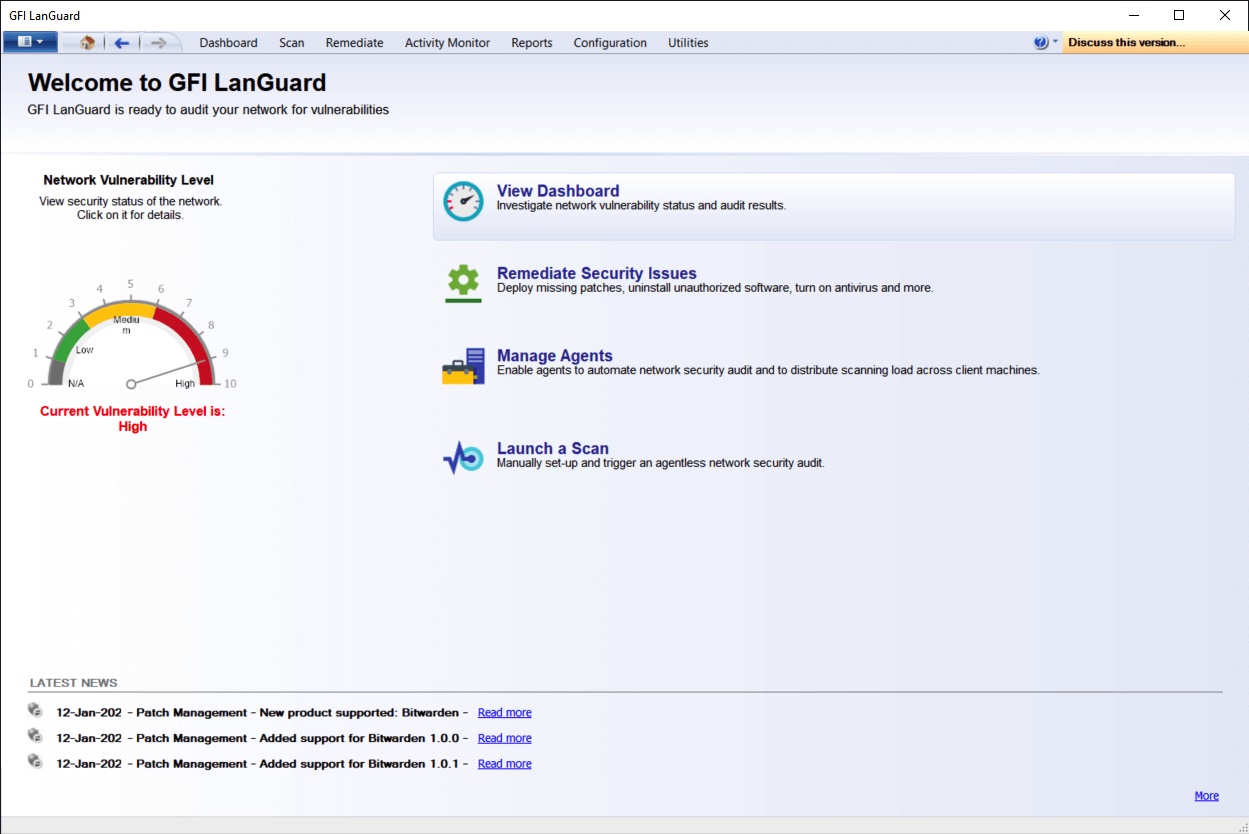
GFI Software offers the GFI LanGuard solution, which provides automated update management for Windows, Mac OS and Linux, vulnerability scanning on computers and mobile devices, and network and software auditing. To enhance security, it enables the creation of an asset inventory for every device on the network, including tablets and smartphones that connect to Exchange servers. GFI LanGuard is also part of the Unlimited Network Security suite, which, in combination with other products, provides multi-layered protection for IT infrastructure.
Article author: ZEBR.ai editorial team



