The most vulnerable software last year were the Android, Linux and Windows operating systems
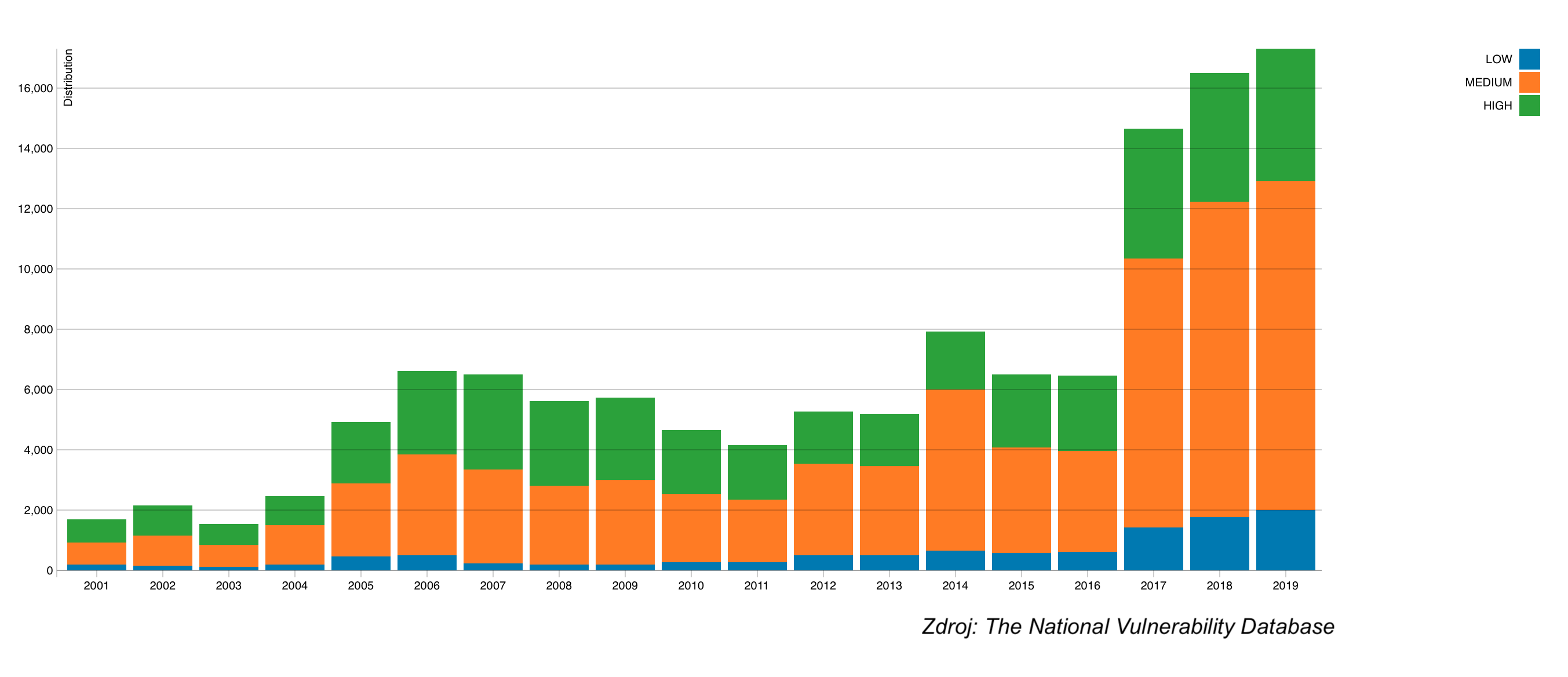
PRAGUE, March 16, 2020 – GFI Software, a provider of security and management solutions for enterprise networks, reported that 2019 saw a further overall increase in software vulnerabilities. A total of 17,310 vulnerabilities were recorded last year, 5% more than in 2018.
Information based on data from The National Vulnerability Database (NVD) shows that the number of vulnerabilities has increased for the third consecutive year.
The highest number of new vulnerabilities was registered in the Google Android, Debian Linux, Windows Server 2016 and Windows 10 operating systems, and among applications in Adobe Acrobat, cPanel and Google Chrome. Overall exposure last year was driven primarily by vulnerabilities in operating systems, which occupied the first 7 of the 10 most vulnerable software products, with as many as five Windows systems appearing in the top ten most vulnerable products. Microsoft ranks first among the most vulnerable vendors, replacing Debian, the most vulnerable vendor in 2018.
Key figures for 2019:
- The most vulnerable desktop operating system in 2019 was Debian Linux (360), followed by Windows Server 2016 and Windows 10, both with 357 vulnerabilities. Windows 7, which ceased to be supported this year, recorded 250 vulnerabilities last year, while Apple Mac OS X recorded 117.
- Among mobile operating systems, 414 vulnerabilities were identified in Google Android, while Apple iOS had 156.
- Among applications, Adobe Acrobat was traditionally the most vulnerable (342), followed by the web hosting application cPanel (321); among web browsers, Google Chrome (177), Mozilla Firefox (105) and Microsoft Edge (90).
- The top 5 software vendors with the highest overall number of vulnerabilities include Microsoft, Google, Oracle, Adobe and Cisco.
“In 2019, we witnessed a number of incidents, not only around the world but also locally, in which infections spread through organizational networks with the help of insufficiently secured systems, as now confirmed by the latest NVD statistics,” said Zdeněk Bínek, responsible for sales of GFI Software solutions in the Czech Republic and Slovakia. “Keeping software solutions up to date is one of several key recommendations of modern cyber protection. Especially this year, when the widely used Windows 7 system ceased to be supported, it is worthwhile to invest in vulnerability scanning tools and automated patch management.”
Article author: ZEBR.ai editorial team