

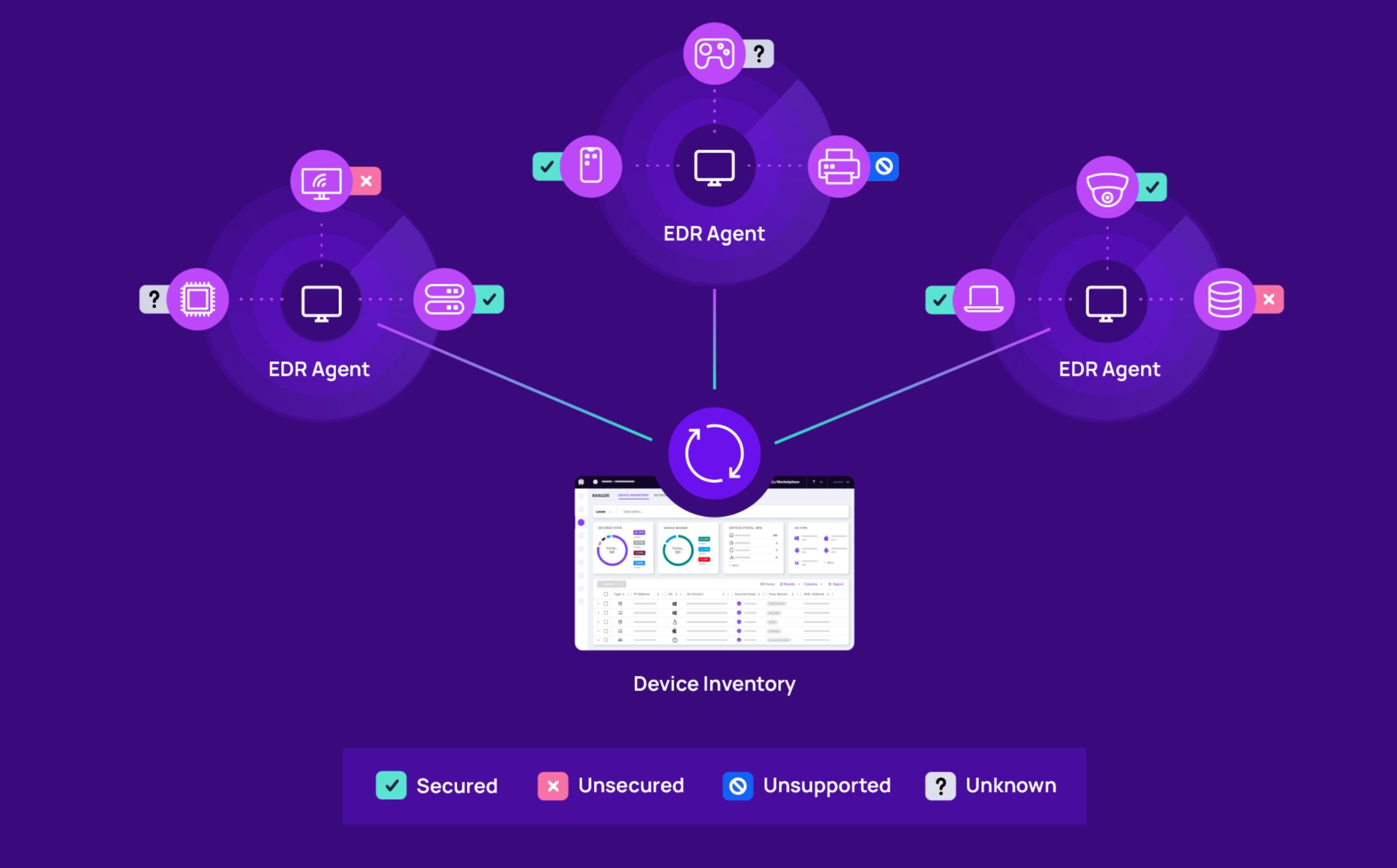
Leveraging SentinelOne Singularity RANGER technology, N-able EDR introduces a solution for reducing potential attack vectors
PRAGUE, November 23, 2023 – ZEBRA SYSTEMS, the distributor of N-able solutions in the Czech and Slovak markets, announced that the N-able Endpoint Detection and Response (EDR) solution is now also available with an advanced potential attack surface management feature. With this feature, built on SentinelOne Singularity RANGER technology, MSP providers and IT professionals can easily detect vulnerable devices on the network and take appropriate measures to reduce the likelihood of cyberattacks and ensure regulatory compliance
The advanced feature is an extension of the N-able EDR agent, making deployment and management easier – no additional agents, hardware, or network changes are required. EDR agents then act as sensors that scan the entire network and collect data on all connected devices, including IoT. IT administrators can therefore quickly identify unprotected or unknown devices, reduce potential attack vectors, and record risky activity for possible audits or incident investigations.
Expanding the N-able EDR solution with another cybersecurity feature addresses one of today's key trends: replacing conventional antivirus solutions with more comprehensive endpoint protection tools (EDR). N-able has identified 5 techniques that can bypass traditional antivirus protection:
- Polymorphic malware, which takes advantage of users not keeping their signature lists up to date.
- Infected documents, typically PDF files that hackers equip with scripts undetectable by antivirus software and capable of attacking the operating system.
- Drive-by downloads, i.e., downloading infected files to endpoint devices by exploiting browser vulnerabilities.
- Fileless attacks, which can easily penetrate antivirus protection because it detects no files to scan.
- Hidden malware, which appears to be harmless code during sandbox scanning but waits until it can attack in a live environment.
“While antivirus software traditionally relies on virus signatures, EDR continuously monitors process behavior and alerts users to potential threats in real time,” said Ondřej Šabata, Sales Engineer for N-able solutions at ZEBRA SYSTEMS. “And now there is another reason to upgrade antivirus protection to EDR: SentinelOne Singularity RANGER technology adds another layer of protection to the N-able EDR solution, enabling service providers to protect the entire network rather than individual devices.”
Click here for more information about N-able Endpoint Detection and Response (EDR), an endpoint protection solution. You can join the EDR webinar, taking place on November 28, here.
Article author: ZEBR.ai editorial team



