

Given the increase in attacks targeting the SMB segment, SMB organizations must also be able to identify weak points before cyber attackers do
PRAGUE, August 8, 2022 – GFI Software, a provider of enterprise network security solutions, stated that, given that 56% of SMB organizations have already become targets of cyberattacks, it is worthwhile for small and medium-sized organizations to conduct regular security audits. Their purpose is to identify vulnerabilities in corporate networks before attackers find them, thereby minimizing the risk of attacks on company systems.
“Many SMB companies believe that they are not of interest to attackers and are not convinced of the need for a security audit,” said Jozef Kačala, Vice President of Global Sales Engineering at GFI Software. “But that is a mistaken assumption, as hackers primarily go where they sense less resistance. From this perspective, SMBs are ideal because they have small IT security budgets, use a minimum of defensive tools and measures, and have small or no teams of IT specialists.”
A security audit can, among other things:
- evaluate data flows within the organization
- identify IT infrastructure vulnerabilities
- detect problems
- evaluate internal or external processes
- identify weak points through which hackers could penetrate
- ensure compliance with an ever-growing number of various regulations and requirements
Given the continuously expanding IT environments within individual companies, a security audit includes up to several dozen tasks that verify the level of IT security. Although a security audit in a typical SMB company can be performed entirely manually, each audit task carried out with the help of a specific tool saves the IT administrator valuable time. As a result, it enables more frequent audits, simplifies the entire process, reduces audit costs, and ultimately also reduces the level of human error.
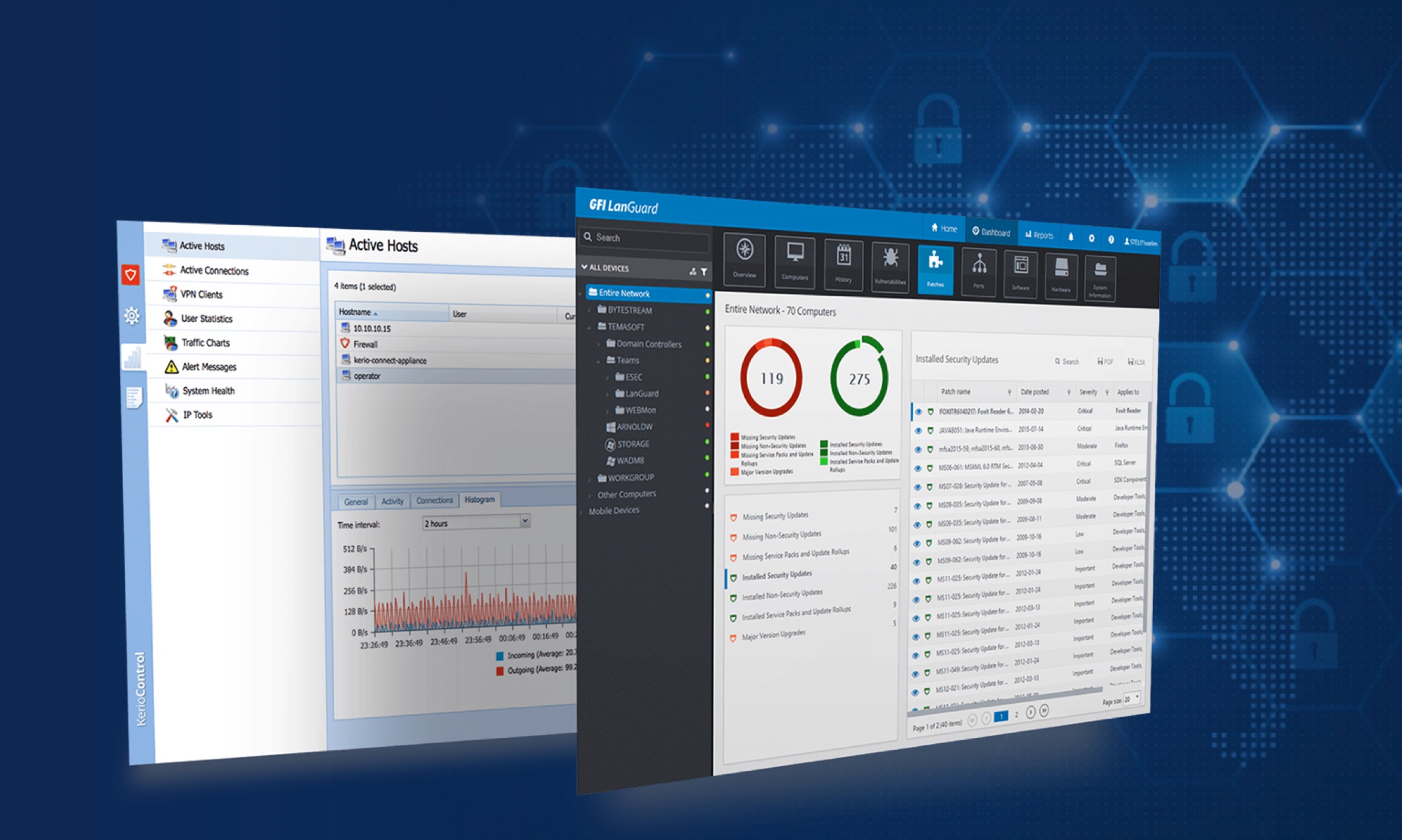
An example of such a tool is GFI LanGuard, which focuses on patch management and vulnerability assessment. It can, for example, help identify threats, inspect servers, identify installed operating systems, check OS and third-party software updates, search for points with unauthorized access, etc. The solution also creates a complete list of active devices in corporate networks, including serial numbers, and can identify logged-in users, running services, potential vulnerabilities, or open TCP and UDP ports.
Article author: ZEBR.ai editorial team



